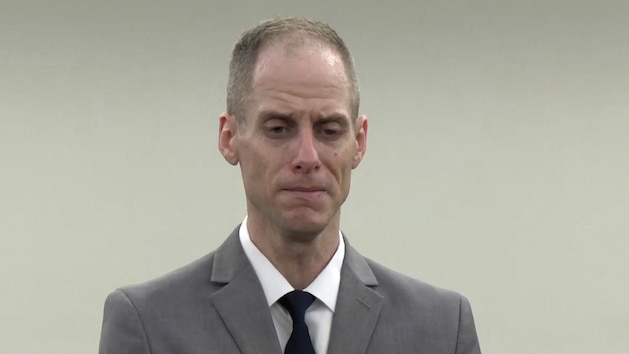
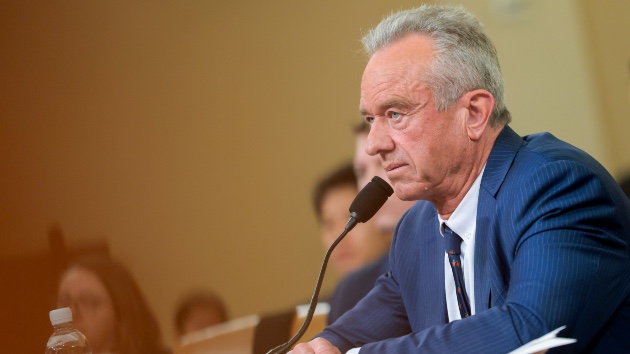
(WASHINGTON) — Health and Human Services Secretary Robert F. Kennedy Jr. was pressed on cuts to the National Institutes of Health (NIH), vaccine messaging and the firing of the former director of the Centers for Disease Control and Prevention (CDC) during a hearing on Tuesday.
The hearing before the House Committee on Energy and Commerce Subcommittee on Health marked the final session of four budget hearings before House lawmakers.
Research cuts
Rep. Lizzie Fletcher, D-Tex., said she was concerned about the loss of federal aid for health research in the Trump administration’s budget request for fiscal year 2027.
“Secretary Kennedy, do you understand that cutting federally funded research as this budget does, will cede U.S. leadership on biomedical research to China and create national security and global competitiveness challenges for the United States?” Fletcher asked Kennedy.
Kennedy acknowledged that he shared Fletcher’s concerns, as the biggest proposed cuts are to NIH and Administration for a Healthy America (AHA) programs.
“I don’t want to cut NIH programs, [Office of Management and Budget Director] Russ Vought doesn’t want to cut NIH programs, but we have a $35 trillion debt,” Kennedy said.
“We have been asked to cut across the board at HHS, 12% of our $100 million budget and so we’re making cuts that are painful,” he told Fletcher.
Vaccine messaging
Rep. Marc Veasey, D-Tex., described Kennedy as the most “anti-vax” figure in his lifetime. He suggested that Kennedy’s history of rhetoric denouncing vaccines is correlated with an uptick in measles cases.
Two unvaccinated school-aged children died last year from measles — the first U.S. deaths from measles in a decade.
Kennedy has long sown doubt in the safety and effectiveness of the measles, mumps, rubella (MMR) vaccine. Despite being a required vaccine in all states to attend public school, rates have been steadily decreasing over the last decade, CDC data shows.
It comes as vaccine exemptions have risen sharply, with at least 138,000 kindergarteners exempt from one or more vaccines during the most recent school year, CDC data shows.
However, in recent weeks, some reports have suggested Kennedy is staying away from vaccine-skeptic rhetoric ahead of the midterm elections.
Veasey and others pressed Kennedy on whether the alleged messaging strategy was directed by the White House. Kennedy denied that it was.
“Is Susie Wiles or anyone in the White House instructing you or suggesting that you stop talking about your controversial vaccine skepticism?” Veasey asked.
“No,” Kennedy replied.
CDC leadership
Kennedy defended firing former CDC director Susan Monarez in a lengthy exchange with Rep. Raul Ruiz, D-Calif.
Ruiz criticized Kennedy for ousting Monarez because she allegedly “refused” to approve what Ruiz called the dismantling of the childhood vaccination schedule.
Kennedy aggressively pushed back on the congressman’s characterization.
“That’s not true,” Kennedy said. “What she testified to wasn’t true.”
Kennedy and Monarez both appeared in front of Senate committees last year to address the ousting.
At a Senate hearing in September 2025, Monarez said she was fired by Trump and Kennedy for “holding the line on scientific integrity.”
Kennedy, in a hearing before a different Senate panel earlier that month, disputed Monarez’s version of events. He denied telling Monarez to accept vaccine recommendations without scientific evidence, and claimed she was fired in part because she told him she was untrustworthy.
During Monday’s hearing, Kennedy claimed that his reasoning for the firing had nothing to do with vaccines and that his department is committing $1 billion to vaccine research through the National Institutes of Health and the National Cancer Institute.
Ruiz claimed Kennedy’s vaccine-skeptic views run contrary to the view of President Donald Trump’s new CDC director nominee, Dr. Erica Schwartz.
During her time with the Coast Guard, Schwartz instituted a disease surveillance program and vaccination programs and wrote the first health protection policies for the force, including anthrax and smallpox vaccination policies.
Kennedy said he vetted Schwartz’s position on vaccines before she was nominated by Trump to lead the CDC. However, Kennedy said he did not speak “to the president directly” before Trump made the nomination.
Kennedy rejected the claim that his and Schwartz’s views were not aligned, but would not commit to following all recommendations of the new CDC director nominee.
“Mr. Secretary, if Dr. Schwartz is confirmed, will you commit on the record today to implement whatever vaccine guidance she issues without interference?” Ruiz asked.
“I’m not going to make that kind of commitment,” Kennedy replied.
Kennedy later repeated, as he has in his previous budget hearings, that he had a “good reason” for firing Monarez.
“I fired Susan Monarez because I asked her an outright question, ‘Are you trustworthy?’ and she said, ‘No,’ and I said, ‘Can I trust you?’ and she said, ‘No,'” Kennedy said. “That’s why she got fired, not because of her vaccine issues.”
ABC News’ Mary Kekatos contributed to this report.
Copyright © 2026, ABC Audio. All rights reserved.

- Starbucks sued over alleged ‘substantial amounts of sugar’ in ‘sugar-free’ drinks, company denies claims - October 6, 2026
- Cornell taps former deputy AG Sally Yates to lead independent review - October 6, 2026
- Cornell police received tip about Chi Phi fraternity seeking to keep alleged gang rape under wraps - October 6, 2026